
Building a scalable brand system for a global SaaS business
When I joined Tes as Head of Design, the company was undergoing one of the biggest transformations in its history.
Having built its reputation through teaching resources, recruitment, teacher training and publishing, Tes was rapidly evolving into a global education technology business, providing subscription software and digital services to schools, colleges and universities around the world.
As the business grew, so did the complexity of the brand.
Multiple product teams, marketing functions, regional markets and external agencies were all producing creative independently, resulting in inconsistencies across campaigns, product marketing, sales collateral and digital experiences.
My challenge was to create a single brand framework that would allow every team to communicate consistently whilst giving the business enough flexibility to market an increasingly diverse portfolio of SaaS products.
The challenge
This wasn’t simply a visual refresh.
The objective was to build a brand system that could support Tes’ transition from a predominantly B2C organisation into a modern B2B SaaS business.
The new guidelines needed to:
- support multiple product portfolios under one master brand
- create consistency across marketing, product and corporate communications
- provide clear governance for internal teams and external agencies
- scale internationally across digital and print channels
- simplify the creation of new assets without compromising brand quality
My approach
Rather than beginning with colours and typography, I started by understanding how the business actually used the brand.
Working closely with stakeholders across marketing, product, commercial and leadership teams, I audited existing creative, identified inconsistencies and documented the different ways the brand appeared across customer touchpoints.
This allowed me to distinguish between what genuinely needed flexibility and what needed standardising.
From there I developed a modular design system that balanced consistency with practicality.
The guidelines covered far more than visual identity, they became a practical toolkit for anyone creating communications across the business.
They established standards for:
- visual hierarchy and layout
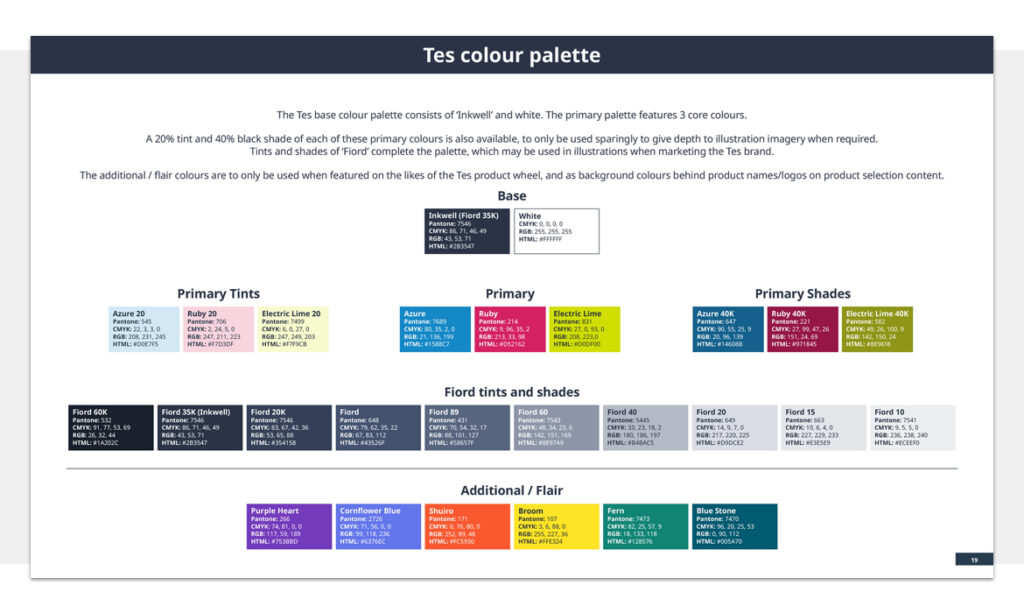
- typography and colour systems
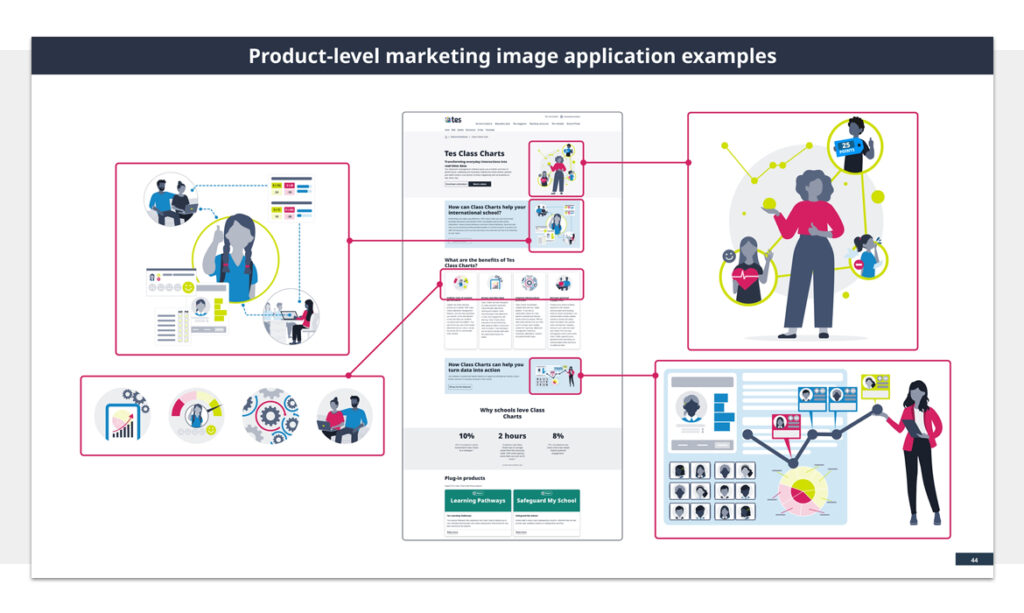
- photography and illustration
- iconography
- digital components
- presentation templates
- sales collateral
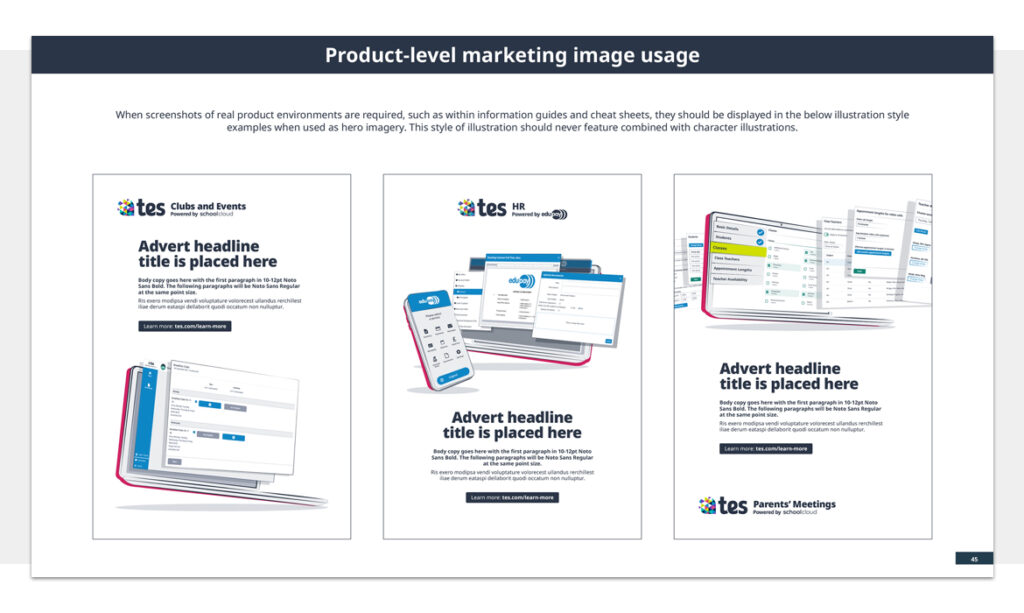
- product marketing
- campaign execution
- tone of voice
- accessibility and usability
- logo usage and brand architecture
Designing for scale
One of the biggest challenges was ensuring the system could work equally well across very different audiences.
Marketing aimed at school leaders required a different level of sophistication from communications aimed at classroom teachers, while product marketing needed to sit comfortably alongside corporate messaging.
Rather than producing rigid rules, I created a flexible framework with reusable components, allowing teams to create new materials quickly whilst maintaining a recognisable Tes identity.
This significantly reduced ambiguity and helped improve consistency across every customer touchpoint.
Collaboration
As Head of Design, I led the development of the guidelines whilst collaborating closely with marketing, product, content, UX and leadership teams.
The work also involved supporting external creative agencies, ensuring everyone worked from the same principles and understood how the brand should evolve.
The guidelines became the central reference point for creative decision making across the organisation.
The outcome
The finished document in 2021 extended to more than 80 pages and became the foundation for creative production across Tes.
It provided a scalable design system that supported:
- integrated marketing campaigns
- digital product launches
- sales enablement
- print communications
- presentations
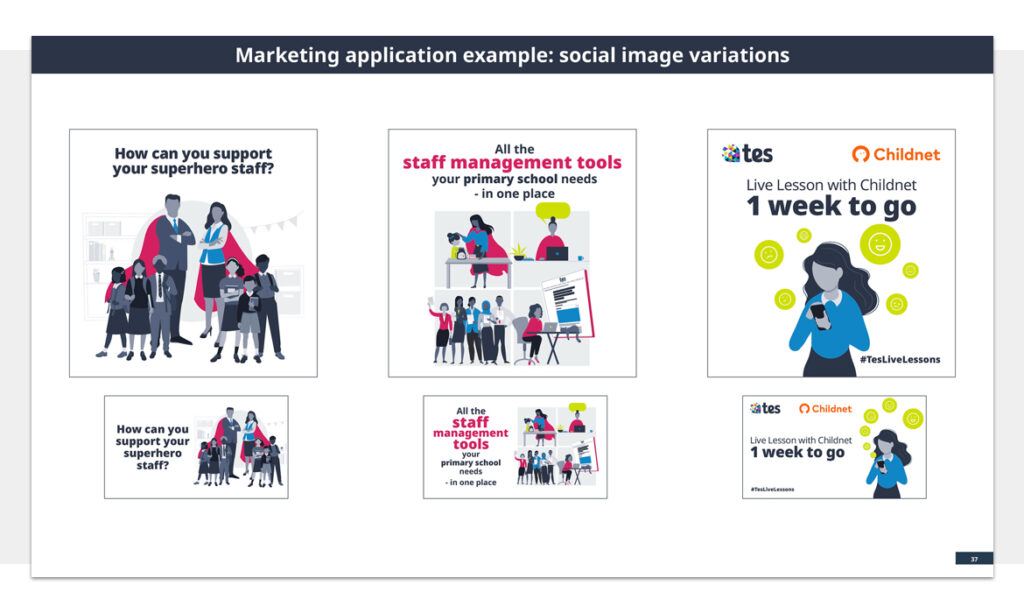
- social media
- product marketing
- international communications
Most importantly, it helped align the visual identity with Tes’ strategic shift towards becoming a global software and services provider for education, giving teams the confidence to produce consistent, high-quality creative at scale.
In 2023, and in response to continuing change within the business the original 80 page version was slimmed down to 47 pages. Some examples of the content are below, or hit the button to view the full document: